04/06/2026
Wir freuen uns, dass wir unseren Kunden Kunstwerke des Dadaisten, Filmpioniers, Autors und Malers
Hans Richter (1888-1976) aus allen Werkperioden anbieten können. Der Bestand umfasst einige hundert Arbeiten auf Papier, Ölbilder, Reliefs, Skulpturen und Druckgrafiken. Sie stammen aus dem Nachlass des Künstlers.
Kurzbiografie: Hans Richter (* 6. April 1888 in Berlin; † 1. Februar 1976 in Minusio, Schweiz) war ein bedeutender deutscher Maler, Grafiker, Filmemacher und Kunstschriftsteller des 20. Jahrhunderts.
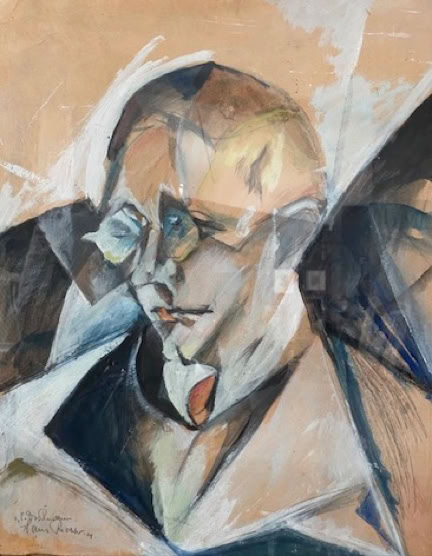
Er begann seine künstlerische Laufbahn als Maler und wandte sich bald der künstlerischen Avantgarde seiner Zeit zu. Im Jahr 1913 kam er mit dem expressionistischen Sturm (Herwarth Walden) in Kontakt. Besonders die kubistischen Werke, die im Herbstsalon der Galerie Der Sturm gezeigt wurden, beeinflussten Richter. 1914 schloss er sich dem Kreis um Franz Pfemfert an. Für dessen Zeitschrift Die Aktion porträtiert er Schriftsteller und Dichter, deren Beiträge dort erscheinen.
Von 1916 bis 1918 geht Hans Richter nach Zürich. Dort kam er in Kontakt mit der Dada-Bewegung. Bereits im Februar 1916 hatten sich die Dadaisten zu einer Gruppe zusammengeschlossen. Zu ihnen gehörten Hugo Ball, Emmy Hennings, Hans Arp, Richard Huelsenbeck, die Brüder Janco und Tristan Tzara. Im Cabaret Voltaire in Zürich verlasen sie in Soireen Manifeste, stellten abstrakte Kunst aus und trugen gleichzeitig Gedichte und Tänze vor, wobei sie groteske, selbst entworfene Masken trugen. Ihre Auftritte sind provozierend und gewagt. Hans Richter schreibt später zwei Bücher über diese Zeit und den Dadaismus: Dada, Kunst und Antikunst (1964) und Begegnungen von Dada bis heute (1973).
In den 1920er Jahren wandte sich Richter dem Film zu und wurde zu einem Pionier des Experimentalfilms. Er experimentierte mit neuen Techniken wie Montage und Collage und schuf avantgardistische Filme, die den Surrealismus und den Dadaismus beeinflussten. Sein bekanntestes Werk ist der Film Rhythmus 21 aus dem Jahr 1921, der als einer der ersten abstrakten Filme gilt. Hans Richter gibt auf Anregung von Theo van Doesburg die Zeitschrift G – Material zur elementaren Gestaltung heraus. Kasimir Malewitsch plant mit ihm die Zusammenarbeit an einem handkolorierten Film (nicht realisiert).
1929 wurde Richter zum Leiter der Internationalen Film- und Fotoausstellung des Deutschen Werkbundes (18. Mai bis 7. Juli) in Stuttgart ernannt. Da er die avantgardistischen Filmemacher aus Ost und West zur Teilnahme einlädt, ist die russische Avantgarde dort stark vertreten. Für diese Ausstellung schreibt Richter sein erstes Buch Filmgegner von Heute, Filmfreunde von Morgen. Der russische Einfluss und die Tendenz zum sozialen Film in Form des expressionistischen Dokumentarfilms gewinnen gegenüber dem poetischen Film an Bedeutung. Nach der Vorführung des Films Alles dreht sich, alles bewegt sich (1929) wird Richter zum „Kulturbolschewisten“ erklärt. Verfolgt von den Nationalsozialisten, die 1933 seine Berliner Wohnung durchsuchen und seine Kunstsammlung beschlagnahmen, flieht er mittellos über Umwege nach Holland, wo ihm die Firma Philips eine Reihe von Filmaufträgen erteilt. Er arbeitet an Filmprojekten in der Schweiz und im französischen Meudon, wo Hans Arp mit seiner Frau Sophie Taeuber und Nelly van Doesburg lebt.
1941 gelingt Richter die Emigration in die USA. 1942 erhält er einen Lehrauftrag am College of the City of New York. 1946 wird Richters erste Einzelausstellung in den USA am 26. Oktober in der extravaganten Galerie von Peggy Guggenheim in New York eröffnet.
1947 erschien sein vielleicht berühmtester Film Dreams That Money Can Buy. Bei diesem Meisterwerk wirkten unter anderem Marcel Duchamp, Max Ernst, Fernand Léger, Alexander Calder und Man Ray mit. Ein weiterer bekannter Film entstand 1956 in Zusammenarbeit mit Marcel Duchamp und Jean Cocteau: 8x8 - A Chess Sonata in 8 Movements. Als Schauspieler treten auf: Marcel Duchamp (in der Rolle als weißer König), Hans Arp, Alexander Calder, Jean Cocteau, Max Ernst, Richard Huelsenbeck, J. Levi,
J. Matisse, Dorothea Tanning und Yves Tanguy.
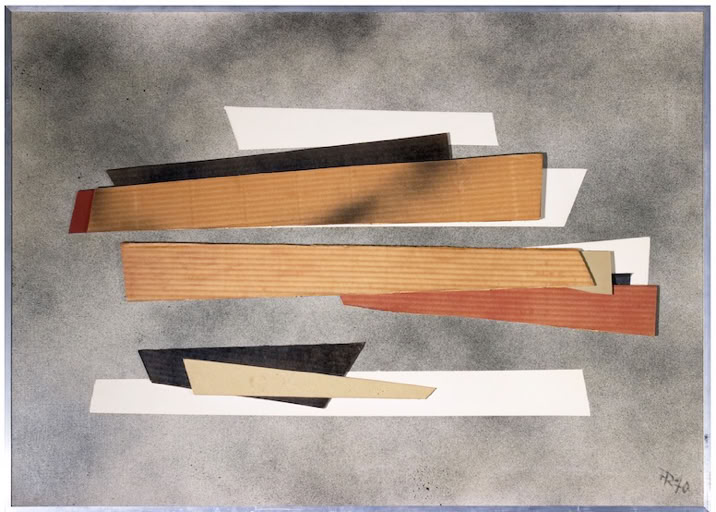
Die Malerei nahm Richter in den 1960er Jahren wieder auf. Es entstanden hauptsächlich abstrakte Werke (Ölgemälde, Collagen – Titel: Dymo, Vibra etc.) Die Serie der Vibras (nach dem Wort Vibration) ist die Summe seiner malerischen Experimente. Die mit Autolack besprühten Collageteile sind vertikal angeordnet und durch mehrere Schichten nach innen gezogen, wodurch Tiefe und formale Dynamik entstehen, die an futuristische Szenarien erinnern. Zwischen 1970 und 1976 stellt er seine Werke in 28 Einzelausstellungen aus und nimmt an etwa 32 Gruppenausstellungen teil.
Am Ende seines Lebens notierte Richter die folgenden fragmentarischen Sätze:
»Falls wir noch eine Zukunft haben, was ich bezweifle. Ja, und warum arbeite ich dann noch? Mit 85 Jahre noch mehr Bilder, Collagen, Reliefs, Bücher. Um das zu beantworten, muß ich die Wissenschaft zu Hilfe rufen und die sogenannten Errungenschaften der Technik, die sie möglich machte. Wenn kein Lichtstrahl und sei er vor 3, 4, 5 Milliarden Lichtjahren gesandt von Objekten, die möglicherweise längst nicht mehr bestehen, je ›verloren‹ geht, sondern heute bei uns ankommt, wenn die Tonwellen aus dem Kosmos, die Röntgenstrahlen, die Radiowellen uns von Ewigkeit zu Ewigkeit erreichen, dann bleibt auch die geistige Intensität, die Schwingungen meiner elektrisch-dynamischen Energie, in meinen Werken, so klein sie auch sein mag, als Ausstrahlung bestehen. Die Maße, Gleichmaße, Harmonien, die dort angestrebt werden, müssen irgendwo, wie alles im Weltall, ihr Äquivalent, ihre Sympathie haben, d. h. als Kraft wirken. Wie, wohin, wozu? Das sollen die beantworten, die die Notwendigkeit unseres Daseins für den Kosmos beantworten können.«
Hans Richter starb am 1. Februar 1976 im Alter von 87 Jahren in Minusio, Schweiz.
* * *
Richters Werke werden in renommierten Museen aufbewahrt (The Museum of Modern Art, New York; Centre Pompidou Paris; The J. Paul Getty Museum, Los Angeles; Kunsthaus Zürich; Staatsgalerie Stuttgart; Deutsches Filminstitut & Filmmuseum, Frankfurt am Main etc.) Sein experimenteller Ansatz und sein Beitrag zur Entwicklung des abstrakten und surrealistischen Films haben Hans Richter zu einer wichtigen Figur der Kunst- und Filmgeschichte gemacht.
Die letzte große Wanderausstellung fand 2013/2014 statt: Hans Richter - Encounters. Los Angeles County Museum of Art, 05.05.-02.09.2013, Los Angeles, Kalifornien; Hans Richter - La Traversée du Siècle. Centre Pompidou, Metz, 29.09.2013-24.02.2014, Metz; Hans Richter - Begegnungen: Von Dada bis heute. Martin-Gropius-Bau, Berlin. 27.03.2014 bis 30.06.2014
Eine ausführliche Biographie (erstellt von Marion von Hofacker) zu Leben und Werk von Hans Richter erschien 1982 im Ausstellungskatalog* Hans Richter 1888 - 1976. Dadaist, Filmpionier, Maler, Theoretiker.
* Ausstellung Hans Richter 1888 - 1976. Dadaist, Filmpionier, Maler, Theoretiker. Akademie der Künste, Berlin, 31. Januar – 7. März 1982; Kunsthaus Zürich, 15. April – 23. Mai 1982; Städtische Galerie im Lenbachhaus, München, 9. Juni – 1. August 1982
We are pleased to offer our clients works of art by the Dadaist, film pioneer, author and painter
Hans Richter (1888-1976) from all work periods. The collection includes several hundred works on paper, oil paintings, reliefs, sculptures and prints. They come from the estate of the artist.
Short biography: Hans Richter (* April 6, 1888 in Berlin; † February 1, 1976 in Minusio, Switzerland) was an important German painter, graphic artist, filmmaker and art writer of the 20th century.
He began his artistic career as a painter and soon turned to the artistic avant-garde of his time. In 1913 he came into contact with the expressionist Sturm (Herwarth Walden). Richter was particularly influenced by the Cubist works shown in the autumn salon of the gallery Der Sturm. In 1914 he joined the circle around Franz Pfemfert. For his journal Die Aktion he portrayed writers and poets, whose contributions appeared there.
From 1916 to 1918, Hans Richter went to Zurich. There he came into contact with the Dada movement. The Dadaists had already formed a group in February 1916. They included Hugo Ball, Emmy Hennings, Hans Arp, Richard Huelsenbeck, the Janco brothers and Tristan Tzara. At the Cabaret Voltaire in Zurich, they read manifestos in soirees, exhibited abstract art, and simultaneously recited poems and dances, wearing grotesque masks of their own design. Their performances were provocative and daring. Hans Richter later wrote two books about this period and Dadaism: Dada, Kunst und Antikunst (1964) and Begegnungen von Dada bis heute (1973).
In the 1920s, Richter turned to film and became a pioneer of experimental film. He experimented with new techniques such as montage and collage and created avant-garde films that influenced Surrealism and Dadaism. His best-known work is the 1921 film Rhythm 21, considered one of the first abstract films. Hans Richter publishes the magazine G – Material zur elementaren Gestaltung at the suggestion of Theo van Doesburg. Kasimir Malevich plans to collaborate with him on a hand-coloured film (not realised).
In 1929 Richter was appointed director of the International Film and Photo Exhibition of the Deutscher Werkbund in Stuttgart. Inviting avant-garde filmmakers from East and West to participate, the Russian avant-garde is strongly represented there. For this exhibition Richter writes his first book Filmgegner von Heute, Filmfreunde von Morgen. The Russian influence and the tendency towards social film in the form of expressionist documentary film gain importance over poetic film. After the screening of the film Alles dreht sich, alles bewegt sich (1929), Richter is declared a "cultural Bolshevist". Persecuted by the National Socialists, who search his Berlin apartment and confiscate his art collection in 1933, he flees penniless via detours to Holland, where the Philips company gives him a series of film commissions. He works on film projects in Switzerland and in Meudon, France, where Hans Arp lives with his wife Sophie Taeuber and Nelly van Doesburg.
In 1941 Richter succeeded in emigrating in to the U.S. In 1942 he received a teaching position at the College of the City of New York. Richter's first solo exhibition in the U.S. opened in 1946 on October 26 at Peggy Guggenheim's extravagant gallery in New York.
Perhaps his most famous film, Dreams That Money Can Buy, was released in 1947. Marcel Duchamp, Max Ernst, Fernand Léger, Alexander Calder and Man Ray, among others, collaborated on this masterpiece. A another well-known film was made in 1956 in collaboration with Marcel Duchamp and Jean Cocteau: 8x8 - A Chess Sonata in 8 Movements. As actors appear: Marcel Duchamp (in the role of the white king), Hans Arp, Alexander Calder, Jean Cocteau, Max Ernst, Richard Huelsenbeck, J. Levi, J. Matisse, Dorothea Tanning and Yves Tanguy.
Richter resumed painting in the 1960s. He created mainly abstract works (oil paintings, collages titles: Dymo, Vibra, etc.) The series of Vibras (after the word vibration) is the sum of his painterly experiments. Collage pieces sprayed with car paint are arranged vertically and pulled inward through several layers, creating depth and formal dynamics reminiscent of futuristic scenarios. Between 1970 and 1976 he exhibits his works in 28 solo exhibitions and participates in about 32 group exhibitions.
At the end of his life, Richter noted the following fragmentary sentences: "If we still have a future, which doubt. Yes, and why am still working? At 85 years even more paintings, collages, reliefs, books. To answer that, have to call science to help and the so-called achievements of technology that made them possible. If no ray of light, and be it sent 3, 4, 5 billion light years ago from objects which possibly have long since ceased to exist, is ever 'lost', but arrives with us today, if the sound waves from the cosmos, the X-rays, the radio waves reach us from eternity to eternity, then also the spiritual intensity, the vibrations of my electric-dynamic energy, remains in my works, as small as it may be, as radiation. The measures, equal measures, harmonies, which are striven for there, must somewhere, like everything in the universe, have their equivalent, their sympathy, i.e. work as force. How, where to? This is to be answered by those who can answer the necessity of our existence for the cosmos."
Hans Richter died in Minusio, Switzerland, on February 1, 1976, at the age of 87.
* * *
Richter's works are held in renowned museums (The Museum of Modern Art, New York; Centre Pompidou Paris; The J. Paul Getty Museum, Los Angeles; Kunsthaus Zürich; Staatsgalerie Stuttgart; Deutsches Filminstitut & Filmmuseum, Frankfurt am Main, etc.). His experimental approach and his contribution to the development of abstract and surrealist film have made Hans Richter an important figure in the history of art and film.
The last major traveling exhibition took place in 2013/2014: Hans Richter - Encounters. Los Angeles County Museum of Art, 05.05.-02.09.2013, Los Angeles, California; Hans Richter - La Traversée du Siècle. Centre Pompidou, Metz, 29.09.2013-24.02.2014, Metz; ; Hans Richter - Begegnungen: Von Dada bis heute. Martin-Gropius-Bau, Berlin. 27.03.2014 bis 30.06.2014
A detailed biography (prepared by Marion von Hofacker) on the life and work of Hans Richter was published in 1998 in: Stephen C. Foster, Hans Richter: Activism, Modernism, and the Avant-Garde. Cambridge, MA, MIT Press. ISBN 978-0-262-56129-7